
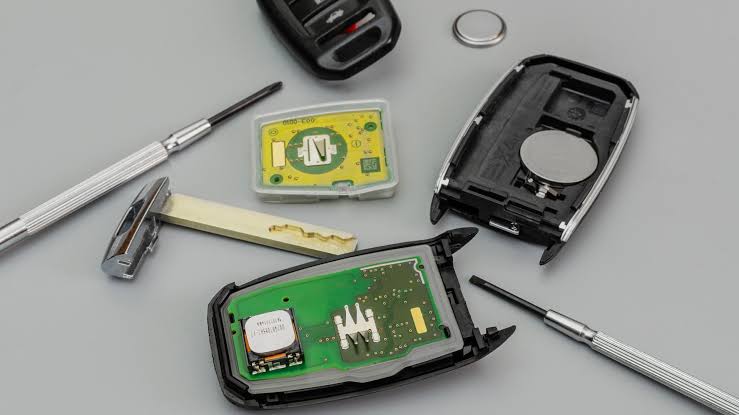
A smart key that suddenly stops unlocking or starting a vehicle doesn’t always need reprogramming. A weak key-fob battery is one of the simplest things to rule out first, especially when the key still works intermittently or only at close range. Starting with basic power and signal checks can prevent unnecessary resets and more complicated diagnosis.
Start With the Key-Fob Battery
A fading coin-cell battery can produce inconsistent behavior. The doors may unlock only after several button presses, passive entry may stop working, or the vehicle may report that the key isn’t detected.
Replace the battery with the correct type and make sure its positive and negative sides match the markings inside the fob. Avoid touching both flat battery surfaces more than necessary because oils and contamination can interfere with clean electrical contact.
Check the Key and Vehicle Before Reprogramming
After installing a fresh battery, test every button and try the key from several normal positions around the vehicle. Owners researching broader vehicle electrical basics may also notice that key recognition depends on more than the handheld transmitter alone.
If one spare key works normally while the primary key fails, the problem is more likely isolated to that fob. If both keys fail, the vehicle’s receiver, antenna, low 12-volt battery, or another shared component becomes more relevant.
Look for Simple Physical Problems
Inspect the fob for water exposure, cracked casing, damaged buttons, or loose internal battery contacts. A battery that moves inside the housing can create an intermittent failure that looks like a programming problem.
When Does Reprogramming Make Sense?
Reprogramming becomes more reasonable after battery, physical condition, and basic vehicle power have been checked. Some owners encounter programming discussions while reading wider vehicle technology material, but procedures vary widely between makes and models.
A key may need programming after replacement, certain electronic repairs, or loss of stored synchronization. Randomly attempting reset sequences can create confusion because an online procedure for one model may not apply to another.
| Check | Possible Finding | Next Move |
|---|---|---|
| Fresh fob battery | Key starts working | No programming needed |
| Spare key works | Main fob likely faulty | Inspect primary key |
| Both keys fail | Shared vehicle issue possible | Check vehicle systems |
| Physical fob damage | Intermittent contact | Repair or replace fob |
Don’t Ignore Vehicle-Side Electrical Faults
Smart-key systems rely on antennas, receivers, body-control electronics, wiring, and a stable vehicle battery. General automotive wiring information can provide useful background when understanding why a perfectly good key may still fail to communicate with the car.
A weak 12-volt battery is easy to overlook because the dashboard may still illuminate. If other electronic systems behave strangely at the same time, checking overall vehicle voltage and connections is more sensible than focusing only on the fob.
Why Reprogramming First Can Waste Time
The common mistake is assuming that every “key not detected” message means the key has lost its programming. Programming normally doesn’t disappear simply because a button needed two presses or the fob battery became weak.
Unnecessary resets can also introduce another variable into the diagnosis. Starting with battery replacement, the spare key, vehicle voltage, and physical inspection creates a clearer path and makes any later programming decision easier to justify.
Frequently Asked Questions
Can a weak smart-key battery stop the car from starting?
Yes. Depending on the vehicle, a weak fob battery can reduce detection range or cause intermittent recognition. Many vehicles also provide an emergency method for starting with a weak key battery.
Why does my smart key work only when close to the car?
Reduced range commonly points toward a weak fob battery, although interference, damaged internal contacts, or problems with the vehicle’s antenna system can also affect reception.
Should I reprogram a key after replacing its battery?
Usually, changing the ordinary fob battery does not require complete reprogramming. If the key still isn’t recognized afterward, check the owner’s manual and vehicle-specific procedures before assuming programming has been lost.
Test the Simple Fixes First
A smart-key failure deserves a methodical check rather than an immediate reset. Install the correct fresh battery, inspect the fob, compare it with the spare key, and consider the vehicle’s own electrical condition. Reprogramming should come later when those simpler possibilities have been ruled out.