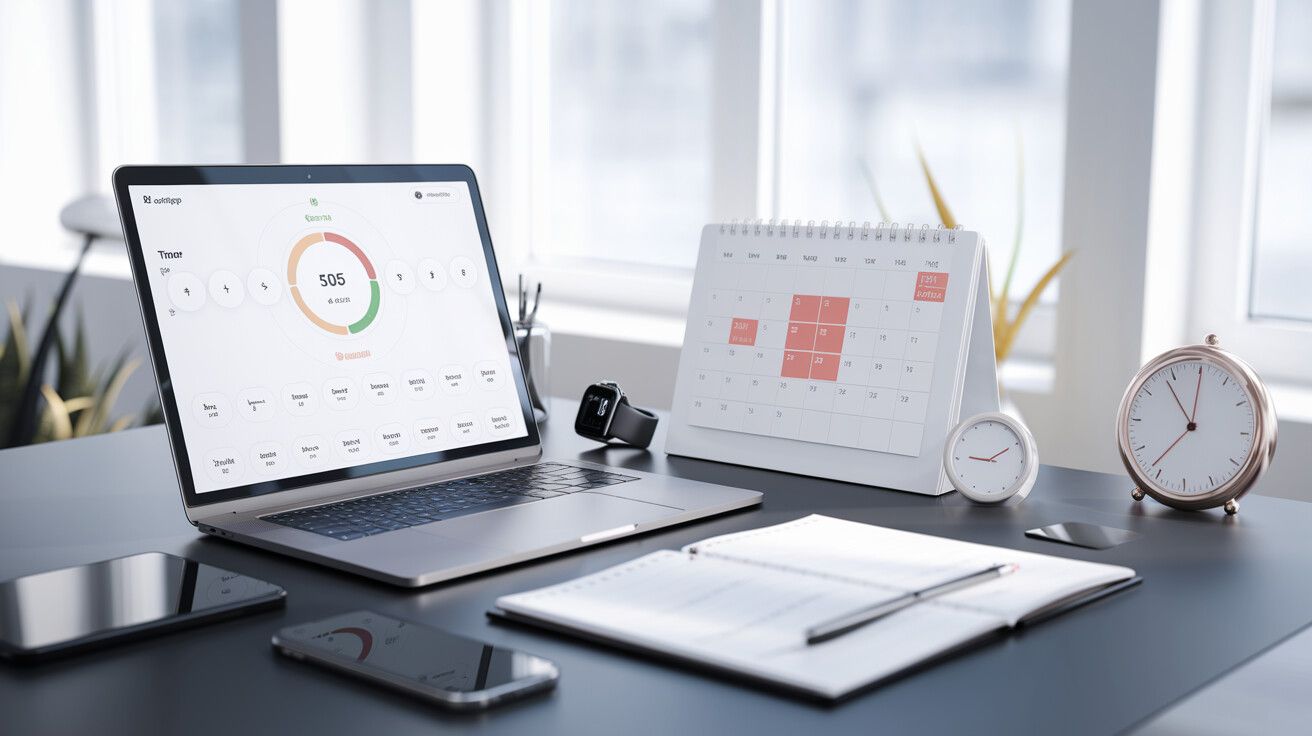
For many U.S. professionals, time tracking overhead starts as a small annoyance and becomes a daily drain on attention. A practical response to time tracking problems focuses on one result: helping people capture enough time information for planning, billing, or review without forcing people to describe every small activity. While comparing products, a separate folder of practical productivity reading can sit beside official vendor documentation without being treated as provider guidance. The five services below approach the problem differently, so compare them against the way your work already happens.
Five Time-Tracking Services With Different Levels of Effort
Before comparing products, write down the current failure in one sentence. For time tracking overhead, that means identifying where the friction actually appears: during capture, handoff, review, access, or follow-up. The most useful comparison points here are live timers, manual timesheets, automatic tracking, project categories, billable status, reporting, and administrative effort. A tool should remove ambiguity at that point, not create a second place that people must remember to check.
1. Toggl Track
Toggl Track supports live timers, manual entries, project and task categorization, tags, billable markers, calendar-style review, and optional automatic activity tracking. It works well when people need fast time capture without turning every workday into detailed administrative reporting. For time tracking overhead, compare these functions with the exact friction you need to remove and keep the setup focused.
2. Clockify
Clockify provides timers, manual time entry, timesheets, project and task categorization, billable status, calendars, approvals, reminders, and reports. Its combination of live tracking and weekly timesheets lets teams choose a lighter or more structured method depending on the work. This makes Clockify useful to compare for time tracking overhead, especially when the team can give the tool one clear role.
3. Harvest
Harvest supports time tracking through web, desktop, mobile, and browser tools, with project-based timesheets and reporting tied to client or project work. It is a practical fit for teams that need time entries to support billing, project review, or capacity decisions without excessive detail. For time tracking overhead, test the relevant controls with normal work first, then keep only the settings that reduce confusion.
4. Timely
Timely focuses on automatic time tracking, AI-assisted timesheet creation, time planning, and reporting so users do not have to start and stop a timer for every task. Automatic capture can reduce forgotten time entries, but teams still need clear categories so the resulting reports are meaningful. For a workflow dealing with time tracking overhead, the practical test is whether these capabilities reduce extra steps without creating another place to manage.
5. RescueTime
RescueTime automatically tracks active apps and websites, reports where time is spent, and offers Focus Sessions that block distracting sites and applications. It is useful when a person needs evidence about distraction patterns before deciding which interruptions to limit. For time tracking overhead, treat RescueTime as one option to compare against your current process rather than adding every available feature.
How Much Time-Tracking Detail Is Actually Useful?
Choose the product only after you can explain the problem without naming a product. In this case, compare live timers, manual timesheets, automatic tracking, project categories, billable status, reporting, and administrative effort. Also decide how much administration the system will require after the first week. If the team needs a specialist to maintain a routine workflow, the setup may be too complicated. Keep helpful workflow references separate from official product help so general research does not get mistaken for vendor instructions. Most importantly, avoid measuring time at a level of detail that costs more attention than the information is worth.
Frequently Asked Questions
What is the first step in fixing time tracking overhead?
Start by documenting where the current process breaks and what a successful outcome looks like. Change one rule or setting first, use it for several days, and then decide whether the problem requires a new tool or only a cleaner configuration.
Can automation solve time tracking overhead by itself?
Automation can remove repetitive steps, but it should follow a clear process. If ownership, priority, or expected behavior is still uncertain, automation may make the confusion happen faster. Stabilize the human workflow first, then automate predictable actions.
What is the biggest setup mistake to avoid?
The most common mistake is adding features before defining the operating rule. Decide who owns the work, where the source of truth lives, and what requires attention. Then configure the software to reinforce those decisions instead of inventing new exceptions.
Measure Enough to Decide, Not Enough to Distract
The lasting fix for time tracking overhead is not a larger stack of software; it is a smaller number of clear decisions supported by the right tool. Keep the rule visible, remove stale configuration, and revisit the setup when work changes. A separate bookmark folder can include additional online references for general digital reference without treating it as documentation for any provider above. Start with the highest-friction step this week, simplify it, and only then decide what deserves automation or a new subscription.