
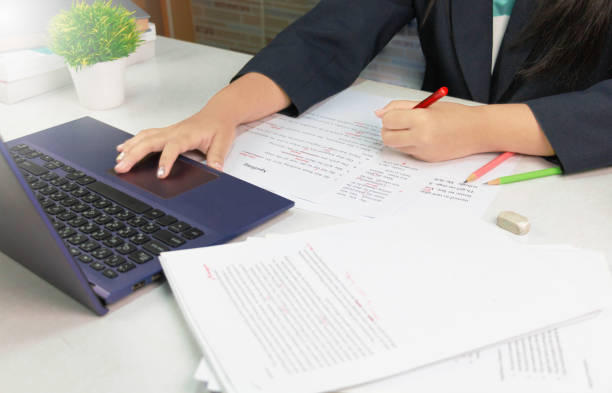
The draft is finished. Almost.
Then the brief comes back into view: 650 words maximum. The document says 812.
That is where perfectly decent writing often gets damaged. A writer starts cutting sentences simply because they are long, deleting examples. After all, examples take space, squeezing three thoughts into one sentence. The number improves. The reading does not.
A word limit is a boundary, not a request to make every sentence smaller. The better question is simpler: which words are carrying the piece, and which ones are merely standing around?
Cut Weight Before You Cut Movement
Some paragraphs are long because they contain useful detail. Others are long because they arrive twice.
Repetition is usually the safest place to begin. An introduction explains the problem, then the next section explains the same problem in slightly different language. A conclusion repeats three points the reader just encountered. Two examples prove what one example already made clear.
Cutting these parts rarely makes a draft feel thinner. Often it makes the argument easier to hear.
There is a difference between shortening a sentence and shortening an idea. The first is mechanical. The second asks judgment.
Find the Sentence That Already Did the Job
Writers sometimes keep explaining because the paragraph still feels unfinished to them. Readers may have understood it four lines earlier.
Take this kind of sequence:
A clear deadline helps a team stay focused. It gives everyone a specific date to work toward. Without a defined date, people may lose focus on when the work should be completed.
Three sentences, mostly one thought.
Keep the strongest version and move on. The paragraph gains pace without losing information.
Edit in Passes, Not in Panic
Trying to remove 150 words in one sweep invites strange decisions. Tiny edits work better when they have different jobs.
First remove repetition. Then question examples. Then inspect slow openings and endings. Only after that should individual sentences be compressed.
It also helps to measure between passes. A word counter can show whether a structural cut solved most of the problem before the writer starts shaving words from sentences that were already doing useful work.
Suppose a draft needs to lose 120 words. Removing a repeated introductory paragraph might eliminate 70 immediately. Cutting one redundant example could remove another 35. Suddenly the remaining problem is 15 words, not 120. That changes the mood of the edit. More importantly, it changes the kind of editing required.
Protect the Words That Create Rhythm
Not every “extra” word is a waste.
A short aside can make a paragraph sound human. A transition can give the reader half a second to catch up. A concrete detail may take eight words where an abstract label takes two, yet the eight-word version is often easier to picture.
This is where aggressive trimming goes wrong. Writing becomes technically lean and strangely breathless.
When choosing between two cuts, keep the sentence that helps the reader understand what comes next. Remove the one that merely proves the writer has thought about the topic.
Read the Draft Where the Cuts Happened
Editing on screen encourages attention to numbers. Reading aloud brings attention back to movement.
After a large cut, read the sentence before it and the sentence after it as if the missing passage never existed. Do they still connect? Does a pronoun now refer to something that disappeared? Did the argument jump from problem to solution without showing the turn?
A successful cut should become almost invisible.
If the reader can feel where 40 words vanished, the edit probably removed a bridge rather than clutter.
Final Thoughts
When a draft runs long, do not begin by attacking sentences one at a time. Start higher up. Remove what repeats, then what overexplains, then what adds a second example where one is enough. Measure again. Only compress sentence-level language when the structure has already been cleaned. The useful principle is simple: cut what the reader does not need before cutting what makes the reader want to continue.