Building a convincing scale model takes more than assembling parts and applying a basic coat of paint. The final result depends on color accuracy, surface texture, controlled weathering, and the small details that make a miniature look like a real machine, figure, or environment.
For modelers who want paints, finishing materials, weathering effects, tools, and learning resources in one place, the collection of AK Interactive products at Art Spices offers a practical starting point. The range includes 3rd Generation acrylic paints, primers, varnishes, themed sets, weathering materials, modeling tools, and instructional books for different scale-model projects.
Why AK Interactive Products Appeal to Modelers
Scale modeling involves several materials that must work together. Primer prepares the surface, paint creates the main color scheme, varnish protects the work, and weathering products add depth, age, dust, rust, staining, or wear.
AK Interactive products are developed around these specific stages. The range supports miniature figures, military vehicles, aircraft, ships, science-fiction models, dioramas, and wargaming pieces. This focused approach helps hobbyists choose materials according to the subject and the effect they want to create.
Art Spices also allows shoppers to compare individual colors with themed sets. A beginner can start with a coordinated paint set, while an experienced builder can select separate shades, thinners, primers, varnishes, and weathering effects for a more controlled process.
Building a Strong Base with Acrylic Paints
A clean finish begins with surface preparation. Washing the parts, removing mold lines, and applying primer can improve paint adhesion and reveal areas that still need sanding or filling. AK Interactive 3GEN primers are offered in white, gray, and black, giving modelers several useful foundations for different color schemes.
After priming, acrylic paint should usually be applied in thin layers. Several light coats protect panel lines, rivets, fabric folds, and engraved detail better than one heavy coat. Thin applications also make it easier to create highlights and shadows without producing rough transitions.
The 3rd Generation collection includes individual colors and themed sets for metallic finishes, flesh tones, uniforms, aged wood, rust, neon colors, and non-metallic metal techniques. These grouped sets reduce guesswork because the included shades are selected for a related visual result.
Choosing Paint Sets for Easier Color Planning
Selecting compatible colors can slow down a project. A themed set solves part of that problem by providing a coordinated palette in one package. Instead of buying several colors separately and hoping they blend well, the modeler begins with shades designed for a particular subject or technique.
This is especially helpful for figure painters. Skin, uniforms, leather, steel, and gold usually need a base tone, shadows, and highlights. A selected set gives the painter a logical progression from dark to light while still leaving room for custom mixing.
Themed colors are equally useful for dioramas. Old wood, abandoned buildings, rusted machinery, and damaged surfaces rarely depend on one flat shade. They require layered browns, grays, oranges, greens, and faded tones. A coordinated set supports this layered approach and helps the scene feel visually connected.
Creating Realism with Weathering Effects
Weathering is often the stage that transforms a clean model into a believable object. Real vehicles and structures collect dust, mud, rain marks, exhaust stains, chipped paint, fuel residue, rust, and grime in predictable locations. These effects should tell a story instead of covering every surface randomly.
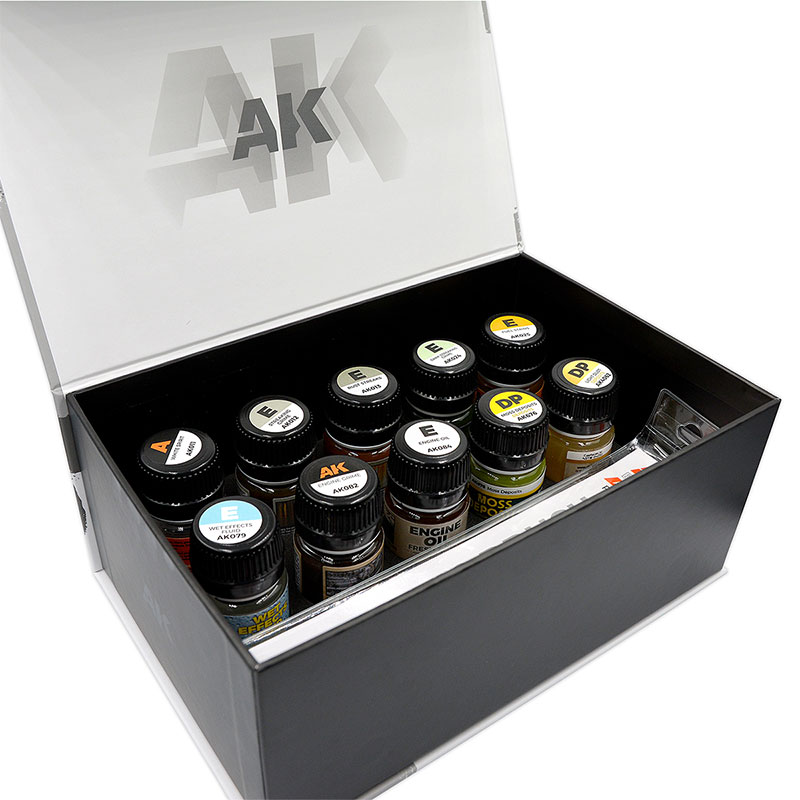
The AK Interactive selection at Art Spices includes weathering sets for crusted rust, heavy mud, dust and dirt deposits, panel lining, exhaust stains, streaking, fuel grime, green vehicles, engines, metal surfaces, and paint chipping.
A reliable method is to build weathering gradually. Begin with subtle panel definition, then add streaks or deposits where gravity, movement, handling, and exposure would naturally create them. Mud belongs near wheels and lower surfaces. Exhaust staining should follow airflow. Rust often appears near exposed metal, joints, damaged paint, and moisture traps.
Restraint matters. Leaving some areas cleaner creates contrast and makes the worn sections more noticeable. It also prevents the model from looking flat or uniformly dirty.
Finishing and Protecting the Model
Varnish changes both appearance and durability. A gloss finish can prepare a model for decals and certain washes, while a matte coat reduces shine on military vehicles, clothing, terrain, and many diorama surfaces. Satin varnish sits between the two and works well when a soft sheen is needed.
Art Spices lists AK Interactive 3GEN matte, gloss, and satin varnishes, together with thinner, cleaner, and supporting materials. These products help modelers manage the complete painting process instead of treating the final coat as an afterthought.
Different parts may need different finishes. A vehicle body might be matte, while glass, polished metal, wet mud, oil, or fuel stains may require selective shine. Careful varnish placement separates these textures and improves realism.
Tools and Learning Materials for Better Results
Paint alone does not guarantee a strong result. Brushes, palettes, cleaners, applicators, and reference materials affect how easily each technique can be controlled. The broader AK Interactive collection at Art Spices includes modeling accessories and learning books alongside paints and weathering products.
Instructional books are useful when a hobbyist wants to understand the order of operations. They can explain how a finish develops through preparation, base coating, shading, weathering, and final detailing. That process is often more helpful than copying a single completed image.
Reference material also teaches modelers how real surfaces behave. Studying worn paint, rust, dust, fabric, wood, and metal improves judgment. Specialized products work best when the builder understands the real-world effect being recreated.
Selecting the Right Products for Your Project
Before buying materials, decide what the completed model should communicate. A restored car requires a different finish from an abandoned tank. A clean science-fiction figure needs different colors and effects than a muddy battlefield diorama.
Choose a primer that supports the base color, select paints that match the subject, and add only the weathering products needed for the environment. Beginners may benefit from themed sets because they simplify color selection. Experienced modelers may prefer individual shades and effects for greater control.
AK Interactive modeling supplies can support every stage from preparation to final weathering, but the best results still come from patience. Test materials on spare plastic, apply thin layers, allow proper drying time, and build effects gradually. With a clear plan and the right supplies, even a simple kit can become a detailed and realistic display piece.